

Your Guide to Live-In Care
Your Guide to Live-In Care: Compassionate Support When You Need It Most
Live-in care services provide personalised, compassionate continuous care in the comfort of your own home by having a dedicated carer live with you. This approach offers companionship, support, and assistance tailored to your specific needs, promoting independence while ensuring safety and wellbeing.
Live in care provides flexibility and adapts immediately to your changing needs. This continuity often leads to a strong relationship between the client and carer, promoting comfort, trust, and a better quality of life.
What is the difference between Live-In Care and 24-Hour Care
- Live-In Care: One carer lives in your home, providing care within a duty period however they will also support you during times of being unwell during the night this support is often for individuals whose care needs are stable and do not require constant physical assistance overnight.
- 24-Hour Care (Shift Care): This usually involves around the clock continuous, active care. It is designed for people with complex or intensive care needs who require constant supervision and physical support, including during the night.
When Is 24-Hour Care Needed?
24-hour care becomes necessary when a person’s needs include:
- Frequent or constant physical assistance, including repositioning or turning to prevent pressure sores
- High-level medical needs or monitoring requiring constant attention
- Risk of falls or wandering that requires supervision at all times
- Complex personal care that cannot be managed safely by one carer alone
- Conditions such as advanced dementia, severe disabilities, or post-operative care requiring continuous support
When would you consider live in care
Click on title for drop down information / description
Respite Live-in Care
Short-term live-in care that gives family carers a much-needed break while ensuring their loved one receives dedicated, professional support at home.
Couples Live-in Care
A cost-effective and compassionate solution for couples who wish to stay together at home, with one carer providing support tailored to both individuals' needs.
Reablement Live-in Care
Focused, time-limited support to help individuals regain independence and confidence after illness, injury, or surgery—working towards specific recovery goals.
Home from Hospital Live-in Care
Immediate, tailored care to support safe discharge from hospital and reduce the risk of readmission, with assistance in mobility, medication, and daily routines.
Companion and Security Live-in Care
A reassuring presence for those living alone—offering companionship, emotional support, and peace of mind around the clock, while helping with light daily tasks.
Specialist Live-in Care
Expert care for individuals with complex health needs such as dementia, Parkinson’s, stroke recovery, multiple sclerosis, or palliative care — delivered by trained carers.
Elderly Live-in Care
Tailored support for older adults to remain safely and comfortably in their own home, maintaining independence, dignity, and daily routines.
Emergency Live-in Care
Fast, reliable care when you need it most — we can put live-in support in place within 24–48 hours for urgent situations like a sudden illness, a fall, or a breakdown in existing care, giving you immediate reassurance and peace of mind.
Night-Time Live-in Care
Overnight care provides dedicated support for individuals who wake frequently or need assistance during the night, ensuring their safety and giving families peace of mind. This is particularly valuable for those with dementia who may exhibit nocturnal behaviours—such as wandering or confusion—that could put them at risk of harm, including leaving the home unsupervised or accidentally starting a fire.
Disability Live-in Care
Personalised care for individuals with physical or learning disabilities, promoting independence, daily living skills, and social inclusion.
Post-Operative Live-in Care
Short-term recovery support following surgery, assisting with mobility, medication, and wound care — ensuring a smooth and comfortable transition back home.
Live-in Care for Younger Adults
Age-appropriate support for younger adults with long-term conditions, disabilities, or rehabilitation needs — helping them live independently and on their own terms.
Palliative Live-in Care
Sensitive, round-the-clock care for individuals with life-limiting or terminal conditions. Palliative live-in care focuses on managing pain, maintaining dignity, and providing comfort and emotional support in the place a person feels most at peace — their own home.
End-of-Life Live-in Care
Compassionate and dignified care during the final stages of life, focusing on comfort, respect, and emotional support for both the individual and their loved ones
What are the benefits of staying at home with a live in carer versus moving in to a residential care home and what is the difference between a care home and a nursing home.
🏠 Benefits of Staying at Home with a Live-in Carer (vs. Moving into a Care Home)
Choosing to remain at home with a live-in carer offers a wide range of physical, emotional, and practical advantages, especially when compared to the structured, shared routines of residential or nursing homes.
✅ Key Benefits of Live-in Care at Home
- Stay in Familiar Surroundings
You remain in the comfort of your own home, surrounded by your belongings, routines, pets, garden, and community—minimising disruption and confusion, especially for those with dementia or memory loss. - Truly Personalised, One-to-One Support
A live-in carer is entirely focused on your unique needs, routines, preferences, and personality. You’re not one of many—you are the priority. - Continuity, Trust, and a Genuine Relationship
You receive care from the same person day after day, building a deep sense of trust and understanding. Unlike care homes, where staff often rotate or work in shifts, your live-in carer gets to know you inside out—your health needs, your habits, and what makes you feel safe and comfortable. - No Shared Care or Waiting for Help
In a care home, support is divided among many residents, which can mean waiting for assistance or receiving rushed care. With live-in care, you have full attention—no queuing, no uncertainty. - Peaceful, Undisturbed Nights
In residential and nursing homes, it’s common to be disturbed by call bells, carers checking on others, or residents calling out. At home, you enjoy a calm, quiet night with support available only if you need it—no institutional noise or disruption. - Flexibility and Choice
Live-in care allows you to decide when you wake, eat, bathe, rest, or go out—there are no rigid timetables or group routines. - Support for Couples
Couples can remain together in their home with shared care. This is not only emotionally supportive but also more cost-effective than paying for two rooms in a care facility. - Emotional Wellbeing and Dignity
Staying at home often reduces loneliness, improves confidence, and supports independence. You receive private, dignified care, where your choices are respected. - Access to Your Own Community
Rather than being limited to in-house group activities, your live-in carer can help you stay connected to your friends, clubs, hobbies, and neighbourhood life. - Safe Management of Complex Medical Needs
With the support of community nurses, GPs, and specialist NHS services, people with complex health conditions (e.g., Parkinson’s, MS, stroke recovery) can often remain safely and comfortably at home. One-to-one care enables close monitoring, better communication with professionals, and more responsive care than what’s possible in a shared setting. - Reduced Infection Risk
Living at home significantly reduces your exposure to infections and illnesses commonly found in communal care environments. - Pet-Friendly
Your pets can stay with you, and your carer can help look after them—an important source of comfort and companionship.
🏡 Live-in Care vs Residential Care Home vs Nursing Home


Personal Care


Medication Management


Mobility & Support

Meal Planning


House keeping
& Support


Companionship & emotional support

What is Needs-Based Care
Our live-in care is tailored to each person’s unique situation. We provide needs-based, condition-led care, which means our support is guided both by your individual preferences and the specific health conditions or challenges you may be living with. From everyday support to more complex care, we work closely with you and your healthcare team to deliver care with compassion, dignity, and attention to detail.
We support a wide range of long-term conditions and complex health needs. Below, we’ve included just a few examples of how our live-in care can help — but this is only a window into the many ways we’re here for you and your loved ones, whatever you may be facing.




Dementia & Alzheimer’s
Our care provides structure, emotional reassurance, and safety. We reduce distress through consistent routines and meaningful interaction.
Compassionate Dementia Care at Home with District Home Care
At District Home Care, we understand the challenges that come with dementia. More importantly, we are dedicated to helping your loved one maintain their independence and comfort by providing compassionate care in their own home.
Dementia is a broad term for a range of symptoms affecting memory, thinking, and social abilities. There are over 100 different types of dementia, with the most common including Alzheimer's disease, vascular dementia, Lewy body dementia, and frontotemporal dementia. Each type has unique characteristics, which is why personalised care is essential.
Our experienced caregivers are committed to creating a safe and supportive environment tailored to the unique needs of everyone. We also offer guidance on home modifications that can enhance safety and ease daily living.
· Working closely with clients and their families, we provide:
· Emotional support to both individuals and their carers
· Respite care, offering family caregivers much-needed rest
· Personal and specialist complex care as needed
· Customised care plans that adapt as needs evolve
Depending on the stage of dementia and the individual’s overall health, some people can live independently with the right support in place. This often involves regular visits from caregivers, safety modifications in the home, and access to community resources however if you feel that your family member would benefit from a one to one live in carer due to their stage of dementia, we can provide the level of support with a live in carer.
Do dementia patients do better at home?
Many people with dementia benefit from staying in their own homes, where they feel secure and familiar surroundings can help maintain their cognitive function and quality of life. Home care provides a personalised approach that adapts as their condition changes.
Helpful Resources
For further information and support, you may find these trusted UK organisations and guides helpful:
- Alzheimer’s Society — Comprehensive information on dementia types, care, and support
- Dementia UK — Specialist advice and support for families caring for someone with dementia.
- NHS Dementia Guide — Official NHS guide on dementia symptoms, diagnosis, and treatments.

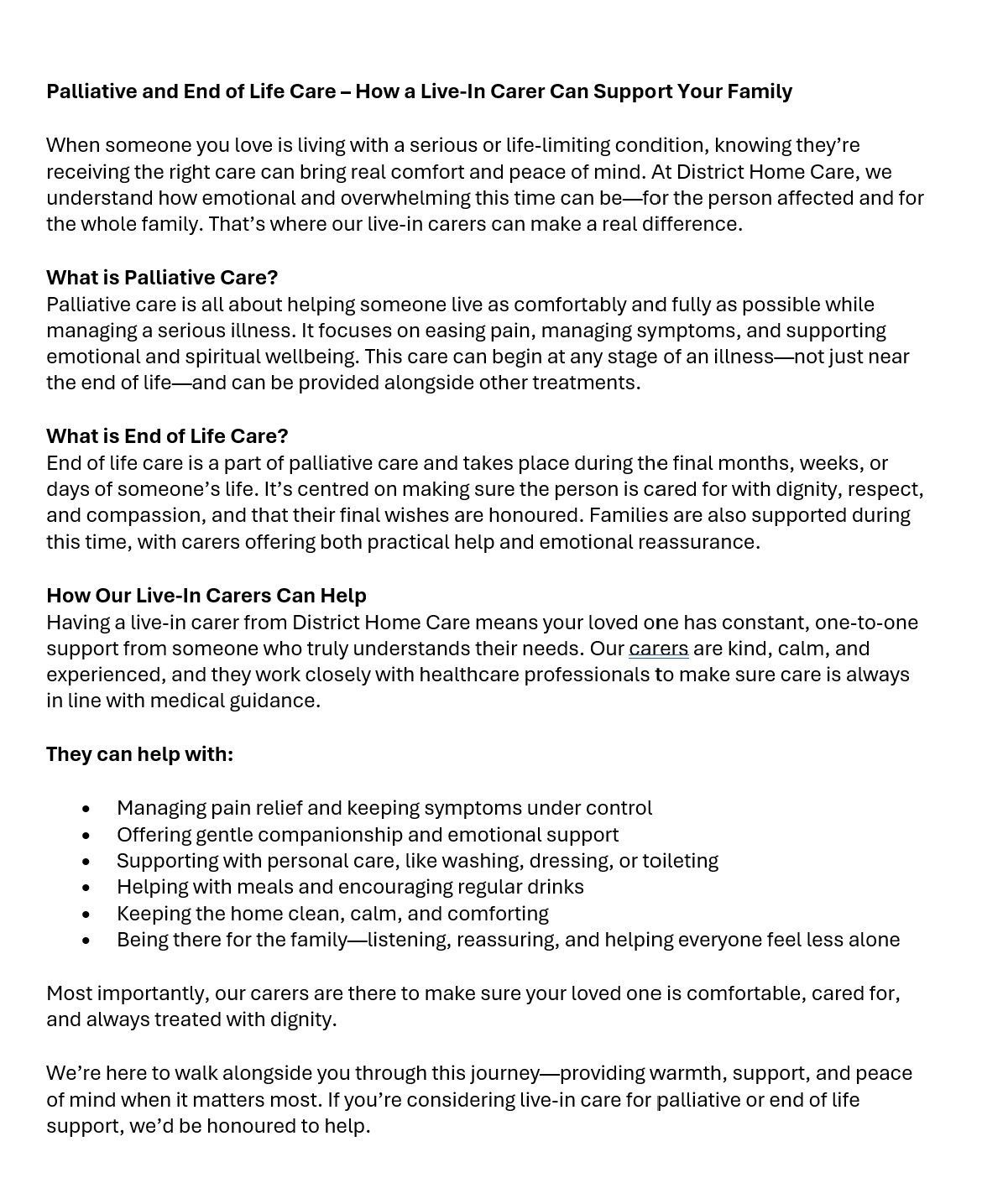
Palliative care and end of life live in care

Get In Touch:
📞 Call us on
01483 721515
📧 Email:
info@districthomecare.co.uk